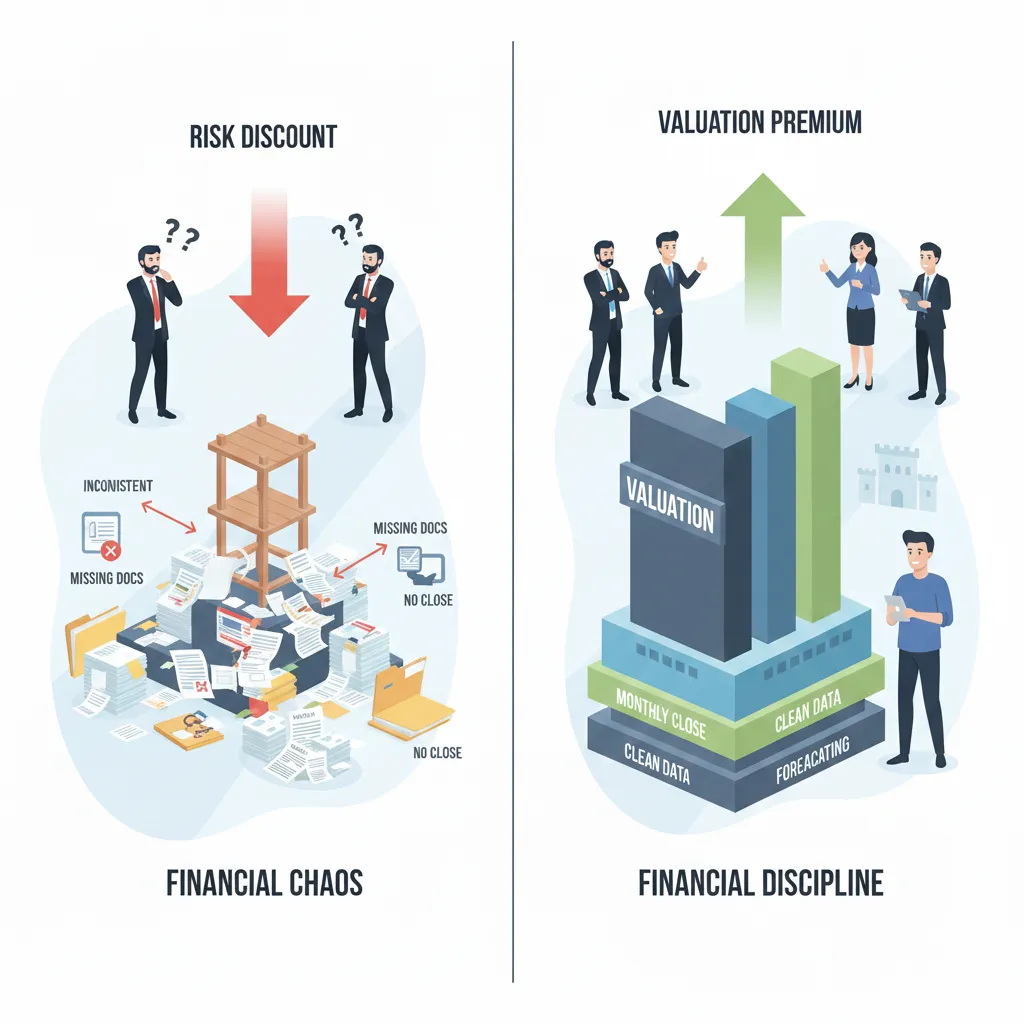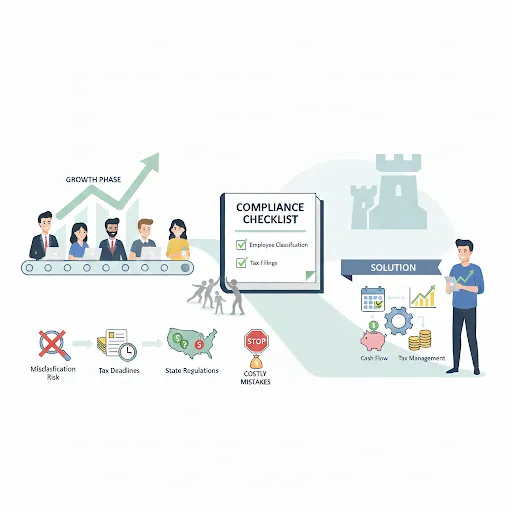
When your startup starts growing in the U.S., your numbers stop speaking only about revenue and expenses — they start speaking about trust, professionalism, and your ability to communicate with investors, accountants, and regulators.
If your financial reports don’t translate seamlessly between English and Spanish, you risk losing clarity right when your company is gaining traction.
1. Financial language is part of your brand
For many Latino founders, accounting began in Spanish. But investors, banks, and funds in the U.S. review financial statements in English — following U.S. GAAP standards.
A bilingual reporting system doesn’t just display your numbers; it shows you’re ready to operate with a global mindset. It communicates that your company understands both worlds: the agility of Latin founders and the structure of American finance.
“Delivering your metrics in English is just as critical as delivering them on time.”
2. Avoid misinterpretations during audits or due diligence
Translating accounting terms too loosely can distort meaning. “Deferred revenue” or “prepaid expenses” aren’t just linguistic equivalents — they’re technical concepts with strict GAAP implications.
A bilingual CPA ensures that your reports are accurate in both languages, reducing the risk of discrepancies during audits or investor reviews.
In fact, research from the Kelley School of Business found that startups presenting audited, standardized financials gain significantly more investor confidence than those with ad-hoc spreadsheets (Kelley School of Business, 2024).
3. Speed up international investor meetings
When your CFO is in New York and your accounting team is in Miami, bilingual reports are the bridge that keeps communication flowing.
With dual-language financial dashboards (EN/ES), each party sees the same metrics in their preferred terminology: MRR, Gross Margin, Burn Rate, or Payroll Costs.
The time once spent clarifying meanings can now go to making strategic decisions.
Studies show that companies publishing reports in multiple languages attract more foreign investor engagement (Bao & Wei, 2024).
4. Strengthen your internal culture of transparency
Bilingual reporting isn’t just for investors — it also aligns multicultural teams operating across regions.
When financial dashboards are available in both English and Spanish, every department can understand how its actions impact margin and cash flow.
This fosters a culture of transparency and financial ownership from day one.
Research confirms that the readability of bilingual reports directly impacts stakeholder trust and engagement (El-Haj, 2016).
5. How Castlewalk simplifies bilingual financial reporting
At Castlewalk, we help Latino-founded startups professionalize their accounting without losing their cultural edge.
Our team of certified bilingual CPAs and advisors translates more than just words — we translate your entire process.
- We connect your books (QuickBooks, Xero, or Gusto) and create bilingual dashboards.
- We align your KPIs with U.S. GAAP and investor reporting standards.
- We audit every figure with a bilingual CPA before each monthly close.
- We deliver investor-ready reports — in English and Spanish — within 7 days.
Conclusion
Numbers may be universal, but how you present them determines how much trust they build.
Your startup deserves financial reporting that speaks the language of your investors, clients, and team.
Castlewalk turns your accounting into a bridge — not a barrier.
Book a free consultation and see how we can set up your bilingual reporting in under a week.